Luxury Vinyl vs Tile Flooring: Which is Right for You?
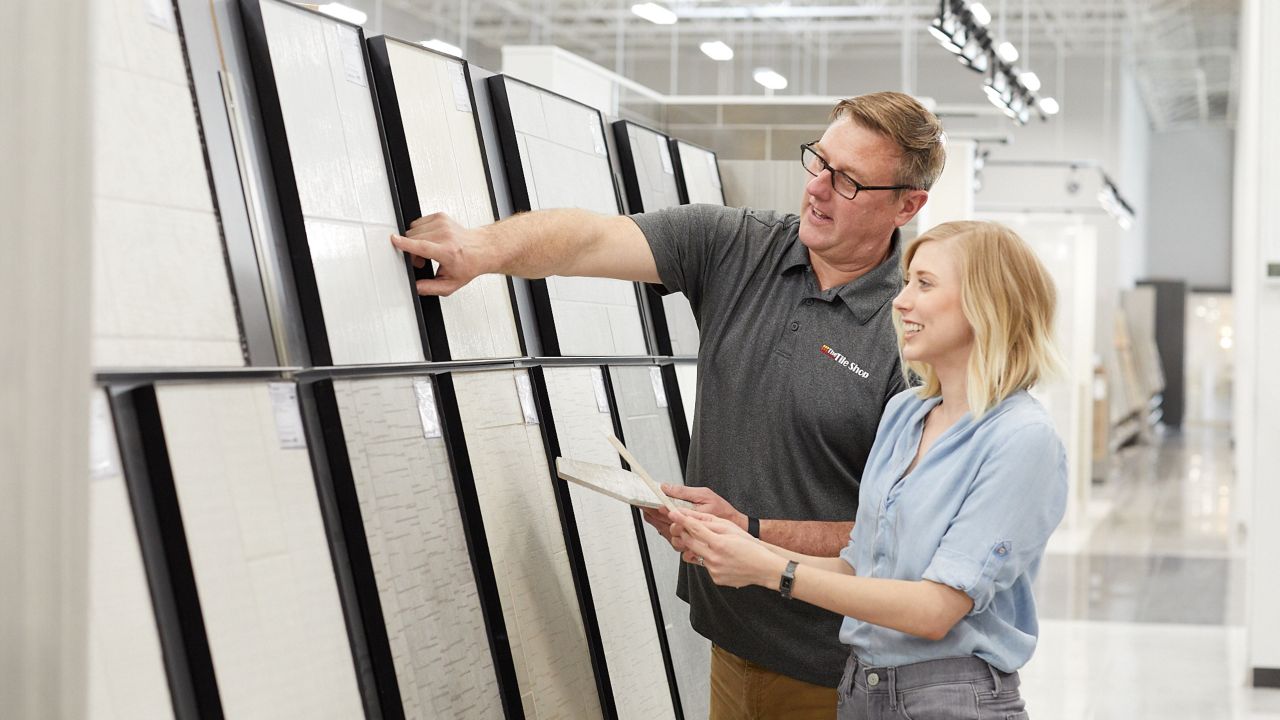
Choosing the right flooring for your home is a big job. Two of the most popular choices, luxury vinyl flooring and tile flooring, offer distinct advantages. In this article, we’ll explore the considerations for each of these flooring options in depth so you can decide between luxury vinyl versus tile and find the perfect fit for your home.
Tile Flooring
Types of tile flooring
Tile flooring comes in a variety of materials, each offering a multitude of different aesthetic and functional options.
Ceramic tile
Made from clay and baked at high temperatures, ceramic tiles are durable and available in a wide variety of colors, patterns and finishes.
Porcelain tile
Porcelain tile a type of ceramic tile that is more durable and water-resistant due to its higher density and finer clay composition.
Natural stone tile
Materials like marble, granite, travertine and slate offer a luxurious, highly textured, natural look.
Glass tile
Often used for accents and mosaics, glass tiles add a unique shine and modern feel to a space.
Metal tile
An unexpected and bold material that can add a stylish feel while providing unmatched durability.
Advantages of tile flooring
Durability
Tile flooring is incredibly durable. Being able to withstand heavy foot traffic makes it an ideal choice for high-traffic areas such as living rooms and entryways.
Water resistance
Tile flooring, especially porcelain and ceramic tiles, are highly resistant to water. This makes them particularly well suited for bathrooms and kitchens.
Aesthetic variety
Tile flooring offers numerous styles, colors, and patterns. This makes it easy to find the right flooring to match any decor.
Easy to clean
Tile flooring is easy to keep clean with regular sweeping and mopping.
Underfloor heating
If you plan on installing radiant heat flooring, tile is a much better conductor of heat, making your space feel warm and comfortable. Other materials may not transfer heat as efficiently.
Increased resale value
Tile floors are a desirable feature for potential homebuyers, potentially boosting your home's resale value. Because of this, the costs associated with installing tile flooring will be partially offset when it comes time to sell your home.
Disadvantages of tile flooring
Cold and hard surface
Tile flooring can be cold underfoot, so you may prefer to include radiant floor heating to offset this. Tile flooring is also harder than vinyl planks (although spaces are easily softened with the addition of a rug).
Grout maintenance
The grout lines between tiles require regular cleaning and sealing to maintain their appearance. Still, this extra bit of maintenance is easy for any homeowner to accomplish.
Installation difficulty
Installing tile flooring can take longer, be more labor intensive and require more attention to detail when cutting pieces.
Where to use tile flooring
- Bathrooms, where tile flooring offers water resistance.
- Kitchens, because it is durable and easy to clean.
- Entryways, which need flooring that can withstand heavy foot traffic and dirt.
- Outdoor spaces, especially patios and walkways, where materials like porcelain and natural stone are popular.
Cost of tile flooring
The cost of tile flooring varies depending on the material. Prices of individual tiles will vary, but these general ranges can help you understand how various materials may fit into your project budget.
- Ceramic tile: $2 to $40+ per sq. ft.
- Porcelain tile: $4 to $50+ per sq. ft.
- Natural stone tile: $8 to $120+ per sq. ft.
- Glass tile: $8 to $40+ per sq. ft.
- Metal tile: $35+ per sq. ft.
In addition to materials, installation will also contribute toward your project costs. Installation costs vary and are based on factors such as region, project size and design complexity.
Luxury Vinyl Flooring
What is luxury vinyl flooring?
Luxury vinyl flooring (LVF) is a high-quality vinyl flooring product designed to mimic the look of natural materials like wood or stone. The construction of luxury vinyl typically includes a wear layer for protection against scratches and stains, a printed design layer that accurately replicates the look of natural materials, a SPC (Stone Plastic Composite) core, and a backing layer for stability and support.
Advantages of luxury vinyl flooring
Cost
Luxury vinyl flooring is set at a lower price point than nearly every type of tile flooring. This can make it easier to get a natural look without needing to spend natural material prices.
Comfort
LVF is softer and warmer underfoot compared to tile. It is therefore more comfortable to walk on, especially in large living rooms and long hallways.
Water and resistance
Luxury vinyl flooring is almost entirely waterproof. When compared to more porous tiles made from natural material, LVF is better suited for moisture-prone areas.
Ease of installation
LVF can be installed by just about any DIY enthusiast. To learn more, check out our guide on how to install luxury vinyl flooring.
Low maintenance
LVF is easy to clean. All it takes is some regular sweeping and mopping to keep it looking like new.
Sound dampening
LVT absorbs sound better than tile, making it a good choice for bedrooms, living rooms, or areas where noise reduction is desired.
Disadvantages of luxury vinyl flooring
Less durable than tile
While scratch-resistant, LVF can puncture or dent more easily than tile. If you need to move furniture or other heavy items over LVF, you should plan to use a moving blanket or dolly.
Less durable than tile
The highest quality LVF remains popular because of how well it simulates the look of hardwood flooring. Still, lower quality LVF may not fully replicate the authenticity of natural materials.
Perception of value
Despite its many benefits, some homebuyers may still perceive luxury vinyl as a lower-value option compared to natural materials like porcelain, natural stone or glass tile, which could have an impact on listing price when it comes time to sell your home.
Where to use luxury vinyl flooring
- Entryways and hallways, where comfort underfoot and ease of cleaning are equally important.
- Living areas, such as living and dining rooms, bonus rooms, playrooms and more, will benefit from the high-end look and luxurious feel of LVF.
- Basements and laundry areas, which require resistance to moisture.
Cost of luxury vinyl flooring
The cost of luxury vinyl flooring is typically around $5 per square foot. Other components required for installing LVF may increase the overall cost of the project, such as edge pieces, stair noses and vinyl plank cutting equipment.
Which Material Is Best for You?
Both luxury vinyl and tile are excellent flooring options, and choosing between them depends on your specific needs and preferences. Each material has several pros and cons.
Tile flooring is the best choice for those looking for flooring that is more durable and better suited for high-traffic areas, as well as those who value a wider range of looks, from rough-hewn and natural to patterned and highly abstract.
Luxury vinyl flooring is the best choice if you are most concerned about budget consciousness, waterproofing, and having the softest and warmest flooring material.
Luxury Vinyl vs. Tile Flooring FAQs