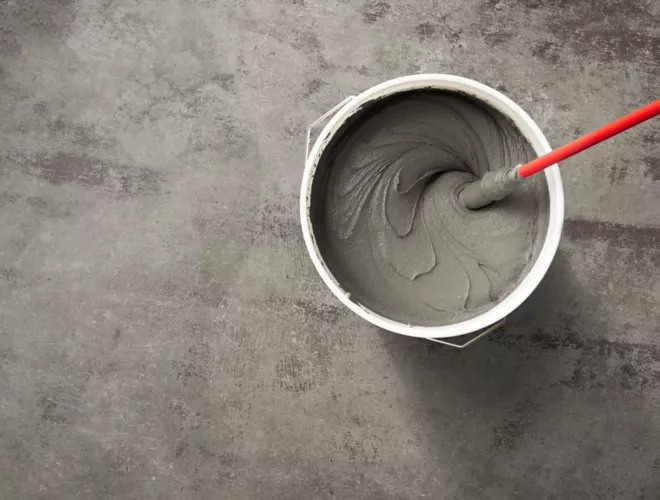
Tile adhesive is the material used to bond tile or flooring securely to a surface. The best adhesive depends on the type of tile, the installation area, and environmental conditions such as moisture, temperature changes, and foot traffic. Common options include thinset mortar, mastic and wood flooring adhesive.
Benefits of Choosing the Right Adhesive
Selecting the correct adhesive helps:
- Create a strong, long-lasting bond
- Improve performance in wet or dry environments
- Support different tile and flooring materials
- Reduce the risk of installation issues over time
- Ensure compatibility with specialized applications such as heated floors
Types of Tile Adhesive
Thinset Mortar
Thinset is one of the most versatile tile adhesives and is commonly used with porcelain, ceramic and natural stone tile. Because it offers excellent moisture resistance, it is a popular choice for showers, kitchens, pools and other wet areas. Modified thinset provides additional flexibility, making it suitable for installations exposed to temperature changes or slight movement, including heated floors and some exterior applications.
Mastic
Mastic is a pre-mixed adhesive that comes ready to use straight from the container. It is easy to apply and works well for many indoor wall installations. Because mastic is not water resistant, it is best suited for dry interior spaces and should not be used in showers, pools or other wet environments.
Wood Flooring Adhesive
Wood flooring adhesive is designed specifically for hardwood, engineered wood, bamboo and other wood flooring products. These adhesives provide flexibility that allows wood flooring to expand and contract naturally while maintaining a secure bond. Many also help with sound reduction and moisture protection.
Best Tile Adhesives by Application
Different tile installations have different performance requirements. Choosing an adhesive based on where the tile will be installed can help ensure a successful, long-lasting result.
Best Adhesive for Shower Tile
Showers require adhesives that can withstand constant exposure to moisture. Thinset mortar is a popular choice for shower walls and floors because it provides strong adhesion and excellent water resistance. Modified thinset can offer additional flexibility in areas subject to temperature fluctuations or movement.
Best Adhesive for Kitchen Tile
Kitchen backsplashes and floors often experience moisture, spills and frequent use. Thinset mortar works well for most kitchen floor and backsplash installations, while mastic may be suitable for dry interior backsplash applications where water exposure is limited.
Best Adhesive for Porcelain and Natural Stone Tile
Porcelain tile and natural stone materials such as marble, travertine and slate are typically heavier and denser than ceramic tile. Thinset mortar is often preferred because it provides the strong bond needed to support these materials on floors and walls.
Best Adhesive for Heated Floors
Radiant heating systems can cause slight expansion and contraction over time. Modified thinset mortar is commonly used with heated floor installations because its added flexibility helps accommodate temperature changes while maintaining a secure bond.
How to Choose Tile Adhesive
Consider these factors when selecting an adhesive:
- The tile material being installed
- Whether the application is in a wet or dry area
- Exposure to temperature changes or movement
- Flooring versus wall installations
- Desired grout and tile color appearance
Frequently Asked Questions
What adhesive is best for shower tile?
Thinset mortar is a popular choice because of its moisture resistance.
Can mastic be used in wet areas?
No. Mastic is best suited for dry indoor applications.
Should I choose white or gray thinset?
White is typically preferred for light-colored tile and grout, while gray can work well with darker finishes.
Expert Advice for Your Project
Choosing the right adhesive is just as important as selecting the right tile. Whether you're installing porcelain tile in a shower, natural stone on a floor, or wood flooring throughout your home, the proper adhesive helps ensure lasting performance and a successful installation. If you need guidance, visit your local showroom and speak with a tile expert who can recommend the best adhesive for your project.