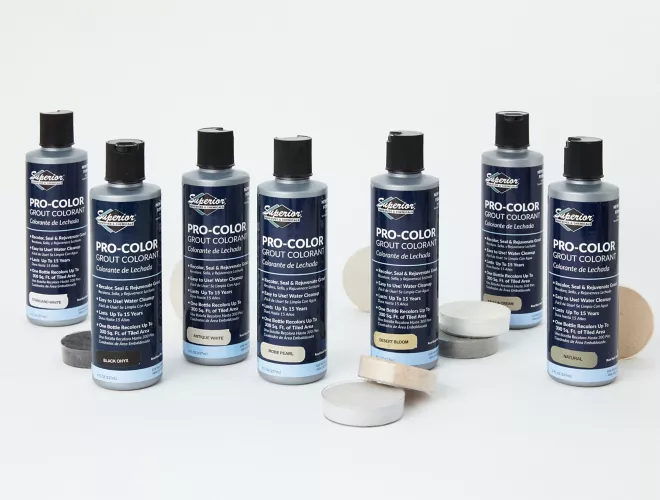
It may not command the same attention as your tile, but your grout is an important part of the installation process that affects the overall look. The color of grout you choose can play into your design in different ways. Grout in a contrasting color makes interesting layouts and patterns pop while matching grout to tile delivers a more minimal and cohesive feeling.
Grout is the material that fills the joints between tiles, helping secure the installation while protecting against moisture and debris. Choosing the right grout affects durability, maintenance, appearance and the overall look of your tile project.
Benefits of Choosing the Right Grout
Enhances the appearance of your tile layout
Protects joints from moisture and dirt
Improves the durability of tile installations
Helps define or soften tile patterns
Available in a variety of colors and performance levels
Grout Options by Application
Grout Type
Best For
Key Benefits
Sanded Grout
Floor tile with joints 1/8" or wider
Durable and suitable for larger grout lines
Unsanded Grout
Mosaic tile and joints under 1/8"
Smooth application in narrow joints
Epoxy Grout
Showers and wet areas
Nonporous, water resistant and stain resistant
How Grout Color Impacts Design
Neutral Tile
White, beige and ivory tile paired with a similar grout color creates a clean, seamless appearance. For greater tile definition, choose a darker grout to emphasize individual tiles and patterns.
Dark Tile
Dark gray, navy and black tile can be paired with matching grout for a sophisticated, uniform look. Contrasting light grout highlights tile shapes, layouts and geometric patterns.
Colorful Tile
Neutral grout colors like white or ivory allow vibrant tile colors to remain the focal point. Contrasting grout can be used to emphasize decorative patterns and layouts.
Best Grout for Common Tile Projects
Floor Tile
Floor tile often has wider grout joints, making sanded grout a popular choice for durability and long-term performance.
Shower Tile
Epoxy grout is commonly recommended for showers because it is highly water resistant and helps prevent moisture penetration.
Mosaic Tile
Mosaic tile typically uses narrow grout joints, making unsanded grout a better choice for smooth coverage and consistent results.
How to Choose Grout
Start with the application: Floors, showers and mosaics often require different grout types.
Consider grout joint width: Wider joints generally use sanded grout, while narrow joints typically use unsanded grout.
Think about maintenance: Epoxy grout offers increased stain and moisture resistance.
Choose a color strategy: Match grout for a seamless look or contrast it to highlight tile patterns.
Coordinate with your tile style: Bold geometric layouts often benefit from contrasting grout, while stone look and neutral tile typically pair well with coordinating grout colors.
Frequently Asked Questions
Should grout match tile color?
Matching grout creates a seamless appearance, while contrasting grout highlights tile shape and layout.
What grout is best for showers?
Epoxy grout is a popular choice for showers because it is nonporous and highly water resistant.
What grout should I use for mosaic tile?
Unsanded grout is typically recommended for narrow grout joints commonly found in mosaic installations.
Is sanded or unsanded grout better for floors?
Sanded grout is often preferred for floor tile installations with grout joints 1/8" or wider.
Grout Design Inspiration
Use matching grout with white subway tile for a clean, timeless look, pair dark grout with light tile to highlight geometric patterns or create contrast with decorative mosaics to emphasize shape and texture. Not sure where to start? Schedule a free design consultation and let our friendly experts help you select the right materials for your project.